The Psychology Behind Social Media Marketing Success
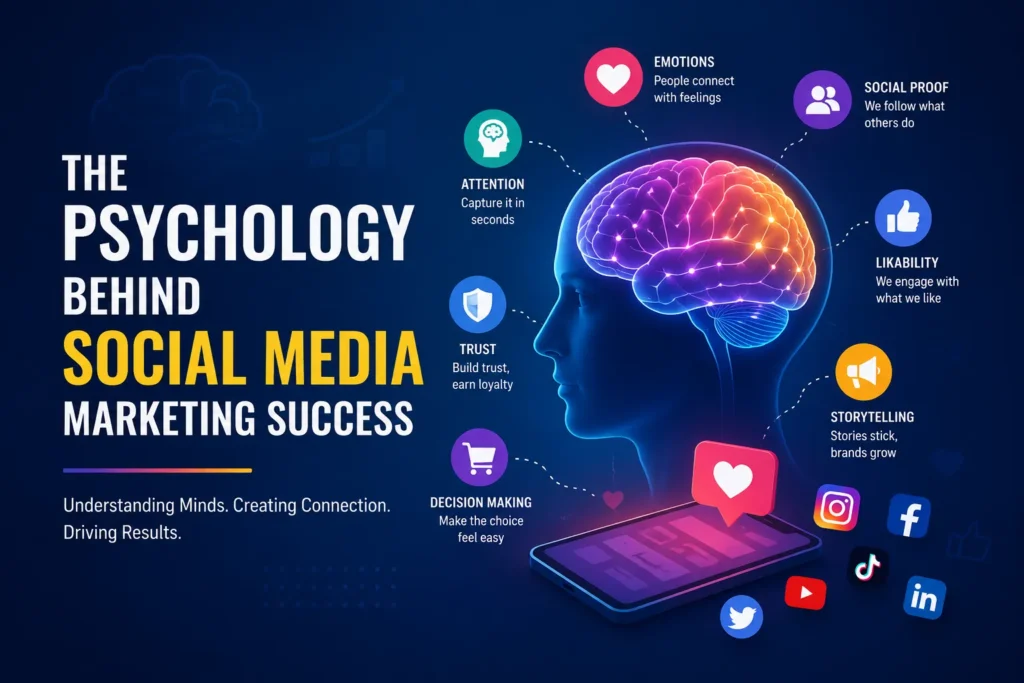
In today’s world, social media plays an integral role in marketing strategies for businesses big and small. The Psychology Behind Social Media Marketing Success helps businesses understand why users engage with certain content more than others. Let’s dig into the various psychological aspects that impact social media marketing and how brands can capitalize on them. The Psychology of the User Experience Attention Span Mastering attention is one of the foundations of the psychology behind social media marketing success because users decide within seconds whether to keep scrolling. The average human attention span is currently around 8 seconds, in case you were unaware. Before their audience scrolls away, marketers have just a few seconds to grab their attention. So, how can brands attract consumers’ attention so quickly? Social Proof Social proof remains one of the strongest principles in the psychology behind social media marketing success, helping brands establish trust and credibility. Here’s how businesses can use social proof: Scarcity Principle FOMO (Fear of Missing Out) is another example of the scarcity principle. Customers are more likely to act quickly when a product appears limited or when a campaign includes a countdown timer. A company can create urgency by the following: Emotional Engagement The Power of Emotion Emotional storytelling is another essential part of the psychology behind social media marketing success, as people often make decisions based on feelings rather than logic. Emotionally charged content is 1.5 times more likely to generate engagement. Developing Loyalty and Community Group Dynamics Consumers naturally seek belonging, and social media gives brands a unique opportunity to build a strong community. Fostering this sense of community can lead to long-term customer loyalty. Storytelling for Brands Authentic storytelling demonstrates the psychology behind social media marketing success by creating meaningful emotional connections with audiences. Sharing your brand’s journey helps establish trust and relatability. Tell stories about: Understanding Audience Behavior Behavioral Targeting Data-driven personalization further strengthens the psychology behind social media marketing success by delivering content that matches user interests and behaviors. Behavioral targeting creates personalized experiences by analyzing user data. The Science Behind Algorithms Social media algorithms determine what users see on their feeds. Understanding these algorithms helps marketers improve visibility and engagement. Key takeaways: Influencer Marketing’s Function The Halo Effect The “halo effect” is a cognitive bias where people assume that if someone has one positive quality, they likely possess other positive qualities as well. This makes influencer marketing especially effective. Integrating Psychology and Technology To increase engagement in today’s digital world, marketers need to combine psychology with technology. Platforms like Arsturn allow businesses to create custom ChatGPT chatbots that improve customer engagement within minutes. Behind social media marketing success, from building trust to increasing engagement and conversions. Here’s how: Conclusion Understanding the psychological principles behind social media marketing takes time. However, by applying concepts such as social proof, emotional engagement, scarcity, and behavioral targeting, businesses can create far more effective marketing strategies. By applying the psychology behind social media marketing success, businesses can build stronger customer relationships, improve engagement, and achieve long-term marketing success.